During my internship I was asked why I chose Estonia for my four week internship. Or how I got interested in studying clay building. Also what is the history of clay building in Finland. This first blog I decided to start by answering those questions asked before. My next text tells more about experiences with Estonian organizations Wanawiisi ehitus OÜ and Equilibre MTÜ where I got knowledge, skills, networks and discussions on techniques about natural building and how to use clay as construction material.
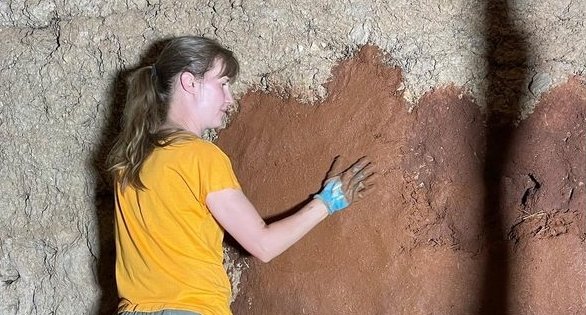
We are used to seeing gray clay in Finland instead of red as on that wall. Both are natural colors of clay.
Why to practice in Estonia
For the internship period there are reasons why Estonia was a good option. Last spring we had a study trip to Estonia from school. During that visit we participated in making a clay floor in an outdoor museum, and also in a course about clay and other natural construction materials. We got to know some interesting organisations in Estonia too.

I visited to see the earthen floor we participated to make last spring in Estonia.
But speaking about knowledge and skills in Estonia. If you compare population and area, there are significantly more old clay buildings in Estonia than in Finland. Thousands in Estonia, just a few hundreds in Finland. Though it can be said that during decades a lot of clay building knowhow has disappeared in both countries, this situation is going in a better direction step by step. Still in Estonia clay is more known as a natural construction material, I think. If you compare the amount of companies and products, practical know-how or international co-operating related to clay, a great job has been and is done in Estonia absolutely. Definitely a lot to learn. Different clay based mixes produced in Estonia.
My first steps in clay building
A little over two years ago I read in the news about a home where clay had been used as a wall material. Then the idea to have a cordwood sauna (“pölkkysavisauna”) appeared. I realized that this clay building method has been used in an old barn at my father’s childhood home. Firewoods, clay and sawdust were used as material. My grandfather had heard a radio program how to build that kind of barn. My aunt still remembers a hard mixing job in a wooden tub and the giggling postman coming to visit who in the dark had fallen into the clay pit next to the path. I found that we have a clay building education in Raisio/Finland and my clay studies began after those phases.
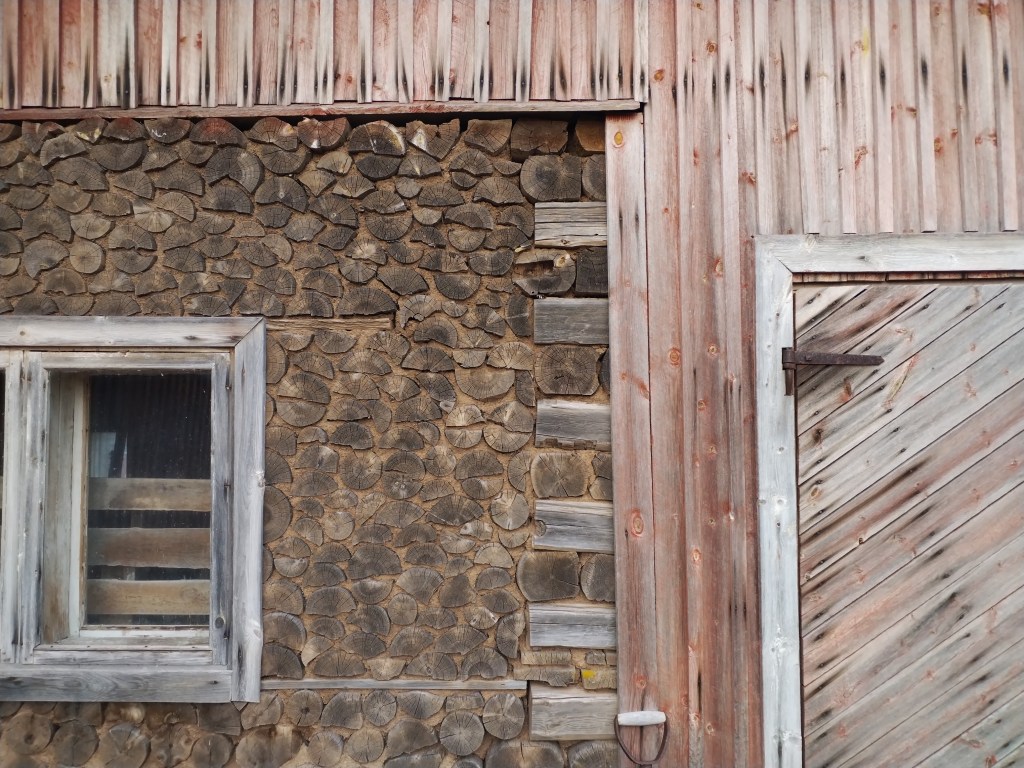
A cordwood wall built by my grandfather in 1953.
Clay building traditions in Finland
Popularity of wooden materials is the reason why clay building has not been so common in Finland. Using clay as a building material began to be more popular in the 18th century when there was a fear of decline of forests. Clay was used mainly for stables or barns but also for houses. Clay plastering also has been used in log houses to seal or level walls. Clay has been an important material in bricks but lots of smaller factories have been closed down during the last few decades. The most common newer method in Finland is to build with straw and clay. Most clay buildings are in Southern and Western Finland, in the clayest part of the country.

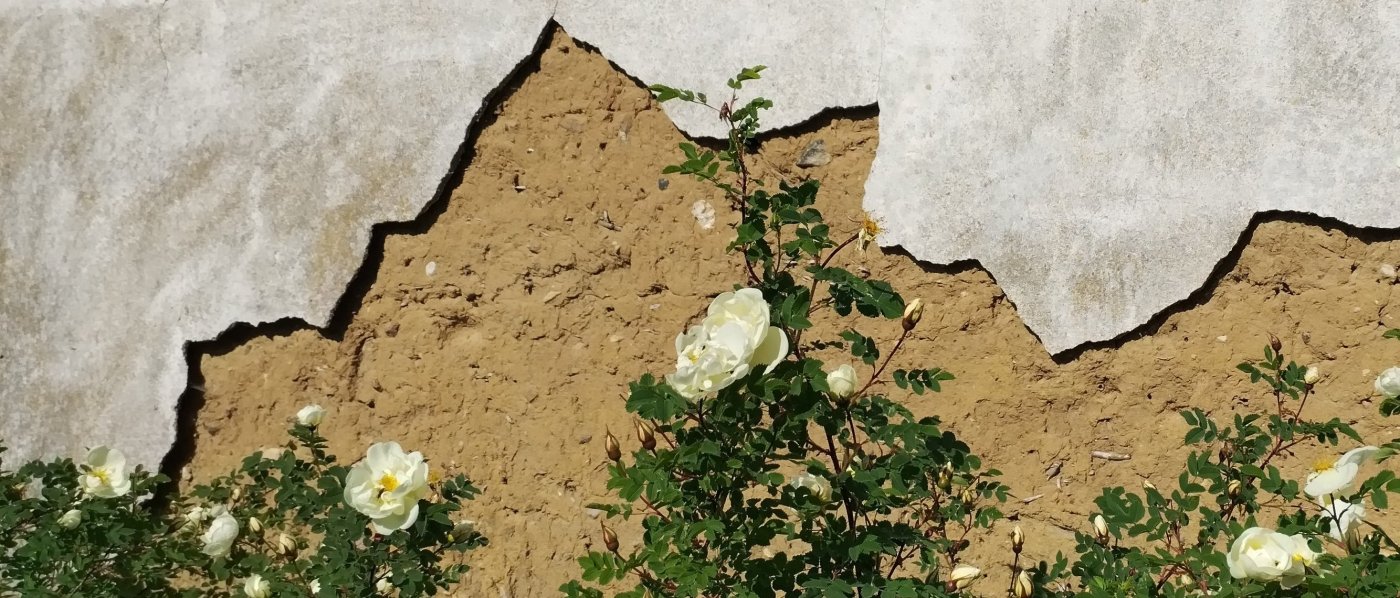
Estonia is a country of thousands clay buildings.
Nowadays building regulations make clay construction more complicated in Finland. Mainly because of thermal insulation reasons and lack of researches. The easiest and the most common ways to use clay in buildings is to make smaller houses when all regulations are not needed to consider or use clay plastering on the walls and make clay floors. Using clay improves indoor air quality and balances the air humidity.
There are research and product development projects running in Finland more than maybe ever before, hopefully giving answers to the regulation matters and construction industry. Vocational clay building education has increased the practical skills, slightly the number of entrepreneurs and definitely the amount of people who enjoy putting their hands in the clay. The Finnish Clay Association has been running over 20 years and after some silent years is actively connecting clay oriented people to share know-how to each other again.
Enthusiasm for clay construction around the world
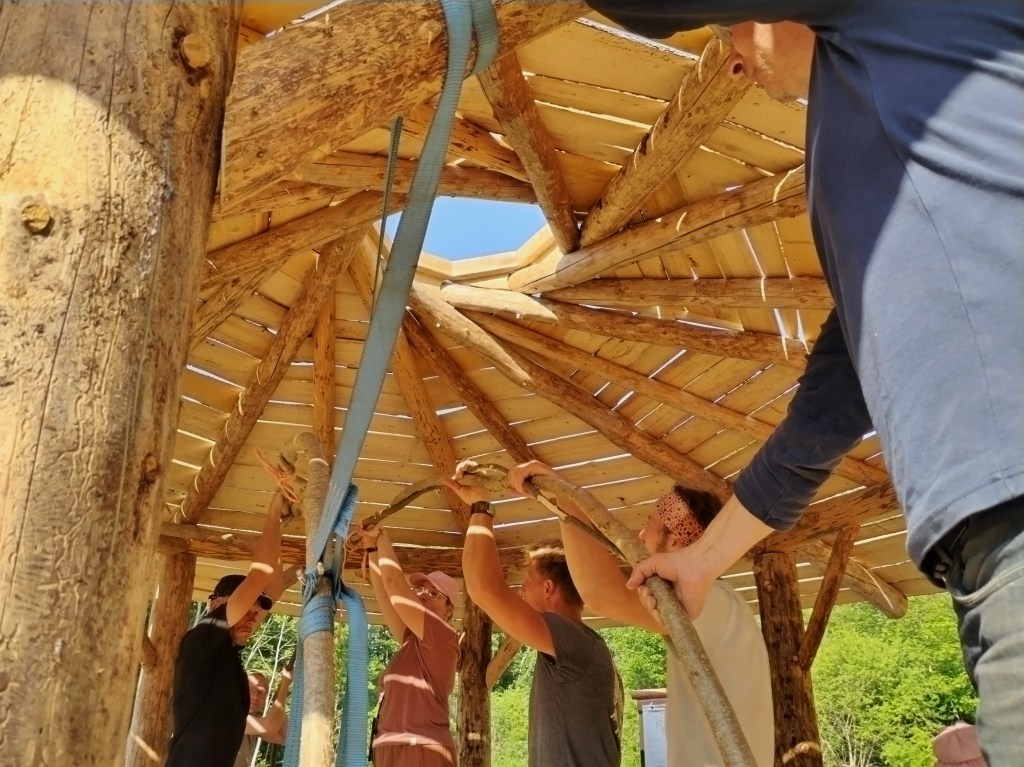
Natural building courses in Estonia bring together people from neighboring countries.
There are a lot of people around the world sharing the same interest to build with clay and earth. Using clay has a long history and building traditions word widely. Today its important meaning is to offer beautiful, sustainable and truly ecological options in construction also in a modern way. Seems to be that in Finland many “do it yourself” -builders and renovators have found clay and need answers on how to get started. Most of the know-how is located in Southern Finland and it is time to spread the word upwards. For me this theme has been so inspiring that after a year I asked to have study leave for a few more months. Who knows all the coming situations in the future how, when and where this four week practicing period in Estonia proves to be useful and by that way multiples experiences.
Written by Hannele
 Raseko International
Jätä kommentti